
When children come to school, they step into a world of movement, curiosity, and exploration. Their clothing plays a quiet yet important role in how freely they can engage with their environment and with others. What they wear can either support or limit their ability to participate to several activities.
Here are a few considerations to help families choose clothing that supports comfort, independence, and participation in school life:
1.Comfort
Children learn best when they can move freely— squatting to look at an insect, sitting on the floor with a friend, or reaching up to hang a painting. Soft, breathable fabrics and flexible clothes allow children to follow their curiosity without discomfort or restriction. Clothes that are too tight, stiff, or overly layered can become a distraction or limitation.
2. Support for Autonomy
Help parents to identify clothes that children can put on, take off, and manage independently. Simple closures like elastic waistbands, Velcro shoes, and easy zippers empower children to take care of themselves during transitions like going to the bathroom or dressing for outdoor play. This supports both confidence and a sense of responsibility.
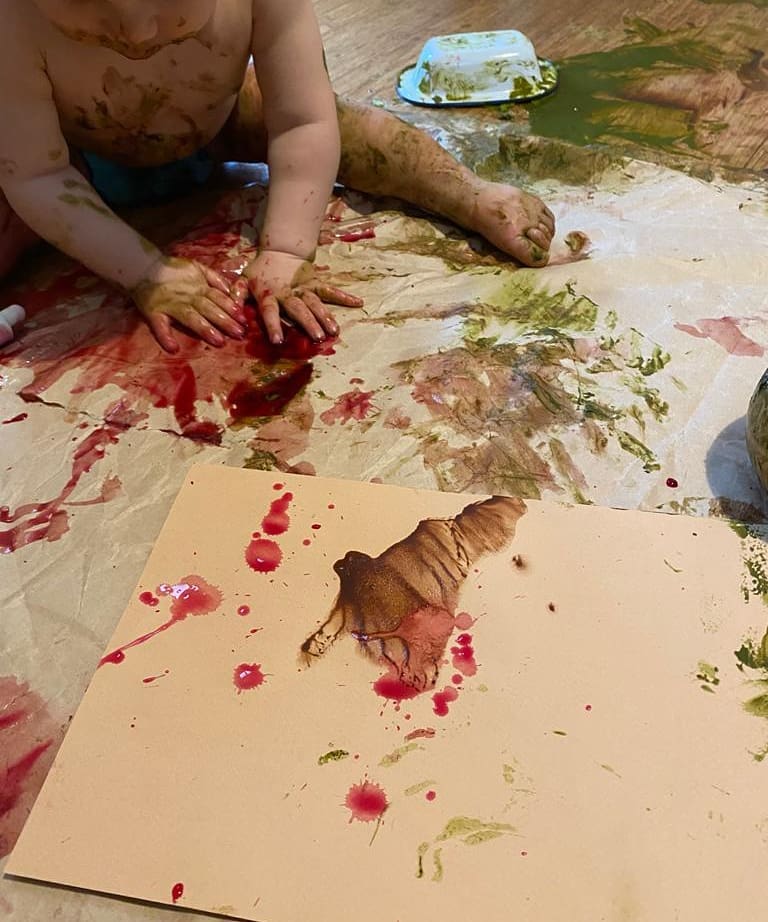
| 3. Garments that learn with us In environments where creative exploration is encouraged, children are often deeply engaged in experiences such as painting, gardening, water investigations, working with clay, or preparing food. These are not simply “messy” activities—they are meaningful learning opportunities , for self-expression, and relationship-building with the world around them. For children to participate fully, they need to focus on what they are doing, not worry about what they are wearing. Likewise, educators should feel confident in offering meaningful experiences without concern about a child’s clothing. We therefore invite educators to promote clothes that are ready to live—garments that can move, bend, stretch, get wet, hold traces of color, or carry the memory of flour, mud, or leaves. These are clothes that accompany the child in their discoveries, not ones that restrict them. Think of clothing as a partner in learning: it should support the child’s autonomy, curiosity, and ability to act freely in the world. A paint mark might speak of a moment of focus; a damp patch might trace a joyful investigation with water. These are not stains, but signs of life—of presence, engagement, and growth. Let us all embrace clothes that are ready to live—not for display, but for depth. |
4. Accessories and Jewellery
For similar reasons, it’s best to avoid sending them to school with jewellery or accessories that can be lost, broken, or become a source of distraction. These items may carry emotional value or create unnecessary tension or comparisons in group settings. Keep things simple so the focus remains on shared experiences.
5. Weather-Ready
Children are, ideally, habitants of the outdoors in all seasons. Parents can be sustained in learning about appropriate equipment that children can manage in autonomy.
The way a child is dressed influences how they experience the school day—not in terms of appearance, but in terms of comfort, participation, and freedom. We invite you to dress your child each day with curiosity in mind, knowing that what matters most is not how they look, but what they are ready to discover.
